From troubleshooting common print issues to optimizing color output, we provide actionable solutions and technical tips to ensure your business runs smoothly and efficiently.
DTF PET Film
A DTF printer uses PET films, which are different from those used in screen printing. These films are also known as DTF Transfer Films in the market. DTF PET films are available in 75u and 100u thicknesses, depending on the temperature, and are also divided into two categories, cold-peel type films, and hot-peel type films, them has excellent-transferring characteristics. You can see more details about DTF PET films at YIQIA DIGITAL.
RIP Software for DTF Printer
For DTF printing, RIP software is an integral part, you will require specialized RIP software to handle your white and CMYK colors. This is because software affects the color performance, the printing characteristics of the ink, and the final print performance.
Hot-Melt Adhesive Powder
The hot-melt adhesive powder is designed to adhere inks to fabrics using DTF printing. Creates a thin adhesive layer on the wet ink deposited on the transfer film, this helps bind the colored pigments in your printer to the surface you are printing on.
DTF Printing Ink
DTF printing ink is specially designed for Direct to Film printing and heat transfer. This pigment ink formulation can reduce print head clogging and dryness. It can withstand countless washing cycles without fading. YIQIA DIGITAL offers different colors of DTF inks such as white, yellow, black, magenta, cyan, orange, green, and fluorescence pink & fluorescence yellow.
DTF Powder Shaker and Dryer
Direct Film printer components speed up your production by printing, powdering, shaking, and melting the powder for final and ready DTF transfers.
Curing Oven
This small industrial oven is used in the Curing process, to melt the printer’s hot melt powder, which then goes on the transfer film.
Heat Press Machine
A heat press is a type of machine that utilizes heat in order to apply designs onto various substrates, this equipment helps transfer the printed images on your film onto the desired surface or fabric.
Maybe you are also interested in this article: How to Choose DTF PET Film?
YIQIA DIGITAL has a global presence in many countries, including emerging and mature markets. We have a well-established sales system and are committed to helping our customers improve their digital printing business with our expertise and first-class service.
If you want to know more, please click the contact information below, YIQIA DIGITAL is at your service.
CONTACT
WhatsApp: +86 13909049794
Wechat: +86 13815887545
E-mail: info@yiqiadigital.com
Product page: yiqiadigital.com/dtf
Facebook: facebook.com/YIQIADIGITAL
Instagram: instagram.com/yiqiadigital
Sublimation paper is a common consumable used in sublimation printing, where the ink is sublimated onto the fabric by high temperature. This allows the ink to bind to the fibers of the fabric and you can barely feel the image on the fabric.
Many customers can’t tell which side to choose for printing with their eyes. How to determine the printable side of sublimation paper?
First of all, we must understand an important characteristic of sublimation paper, that is, the difference between sublimation paper and other printing papers is that sublimation paper has a special coating on its surface, which is an important reference factor used to distinguish the front side from the backside. The coated side is the side on which we need to print the image, which is often referred to as the front side.
This important feature can be used to distinguish between the front and back of the sublimation paper. Here are a few ways to share it with you:
1. Hand feel method
A common technique for novices is to wet your thumb and forefinger and pinch the corner of the paper, the coated front side will be stickier. After touching it you will be able to easily determine the printing side.
2. Surface of the sublimation paper
Carefully observe the surface of the paper, one side is smooth, and the other is relatively rough. In general, the front side with the added coating will be smoother, which is the printing side.
YIQIA DIGITAL has a global presence in many countries, including emerging and mature markets. We have a well-established sales system and are committed to helping our customers improve their digital printing business with our expertise and first-class service.
If you want to know more, please click the contact information below, YIQIA DIGITAL is at your service.
CONTACT
WhatsApp: +86 13909049794
Wechat: +86 13815887545
E-mail: info@yiqiadigital.com
Product page: yiqiadigital.com/sublimation-transfer-paper
Facebook: facebook.com/YIQIADIGITAL
Instagram: instagram.com/yiqiadigital
DTF printers require routine maintenance to work better. The following are the routine maintenance procedures for DTF printers.
1. Before the DTF printer is turned on, observe whether objects are piled up above and around the printer to ensure neatness around the machine.
2. Check whether the two sides of the printer are parallel before printing, otherwise, it will lead to an uneven printing pattern.
3. It is recommended to clean the printhead before printing every day or 2-3 days to clean once.
4. Check the remaining amount of ink every day, and add it in time when it is almost finished, to avoid the ink tube pumping the air in.
5. Reset the printhead after printing, because the printhead has a sealed protective cover in the initial position, it is not easy to clog, ensuring the service life of the printhead and the machine.
6. Turn off the power and network cable only after the printer is completely shut down, otherwise, it will seriously damage the print port and PC motherboard.
YIQIA DIGITAL has a global presence in many countries, including emerging and mature markets. We have a well-established sales system and are committed to helping our customers improve their digital printing business with our expertise and first-class service.
There are many ways to print images on fabric, sublimation printing and DTF are two of the most common methods used in garment printing. While both methods can provide high-quality printing effects, each has advantages and disadvantages, and an important difference is how long the printed image lasts. Does DTF printing last longer than sublimation printing?
Below is a comparison to help you determine which printing method is better for your production.
What is Sublimation Printing?
In sublimation printing, the ink goes directly from a solid state to a gas. This allows the ink to bind to the fibers of the fabric and you can barely feel the image on the shirt. The material’s texture remains unchanged. The image is printed on sublimation paper and then transferred from the paper to the fabric.
What is DTF Printing?
Direct-to-film printing (DTF) on a particular film, is then transferred to the chosen fabric or leather using a heat press. After the fabric dries, you can feel the print on the fabric by touching it with your hand. It is smooth to the touch though. But the texture is different from the ordinary, unprinted fabric.
How long do images last?
Sublimation images last longer under normal conditions. The life of a DTF print may exceed that of a sublimated image under certain circumstances. By “last longer” means that the image remains vibrant and does not fade, peel or crack. There are many factors that can affect the duration of the image on the fabric.
Factors Affecting Image Durability
The duration of an image on a shirt or other fabric depends on the following factors:
Printing process. Images from different printing techniques differ in terms of retention time, as the ink bonds perfectly to the fabric, and sublimation printing usually lasts longer than DTF.
Quality of the printing ink. Ink quality makes a big difference. The higher quality of the ink used in any printing method, the better image will print and the longer it will last.
Quality of the printer. The quality of the printer affects the life of the printed image. High-speed printers are designed to produce large quantities of garments quickly, with a corresponding drop in quality. Before choosing a printer, you need to take into account your production goals.
Type of fabric. Sublimation printing performs best on polyester or blends with at least 2/3 polyester content. there are virtually no fabric limitations to DTF printing. DTF patterns on cotton may fade more quickly than sublimation patterns on polyester because polyester and other synthetic materials resist fading longer than cotton.
Choose the most suitable printing method for your production goals.
If your goal is to produce a large number of different styles of printed garments, with DTF printing may be best for you. If your goal is to produce realistic, high-definition printed images, sublimation printing is your best option. When it comes to printing lasting images, your printing ink and equipment are the most important factors.
YIQIA DIGITAL Has Everything You Need for Apparel Printing
Whether you decide on sublimation printing or DTF, YIQIA DIGITAL has the supplies you need, from ink to sublimation paper and dtf film. Contact us now or browse our products at yiqiadigital.com.
Maybe you are also interested in this article: What is Sublimation Paper & Why it’s Important?
DTF printers often encounter the problem of clogged printheads, which need to be cleaned. The following are the cleaning precautions compiled by YIQIA DIGITAL. When cleaning the printhead, you must avoid the wrong operation, which will damage the printhead and affect the production schedule.
1. Due to the corrosive nature of the cleaning fluid, the printhead can not be completely submerged in the cleaning fluid. The correct operation is to add the appropriate amount of cleaning fluid into the printhead cleaning while avoiding the use of substandard quality cleaning fluid.
2. Printhead’s serious blockage only when the use of ultrasonic cleaner cleaning, time control in about 3 minutes.
3. If you want to replace a different brand of DTF ink, clean the ink cartridges and printheads to avoid mixing different inks to produce impurities that block the printhead, and change the color and quality of the ink, affecting the actual results of the print.
4. Determine that when the printer is not used for more than 48h, it is recommended to clean the ink in the printhead, otherwise, the ink in the nozzle will gradually evaporate because of the solvent and dry out resulting in clogging.
YIQIA DIGITAL DTF Printing Ink is specially designed for Direct to Film printing and heat transfer. This pigment ink formulation can reduce print head clogging and dryness. It can withstand countless washing cycles without fading.
YIQIA DIGITAL is the industry’s leading one-stop provider of digital printing. We supply sublimation paper, ink, DTF consumables, and customer needs. We have a well-established sales system and are committed to helping our customers improve their digital printing business with our expertise and first-class service.
As one of the sublimation printing core printers, the printing speed is currently divided into three categories: low-speed, medium-speed, and high-speed printer.
The low-speed and medium-speed machine is actually not a particularly obvious definition, generally, a full-width print speed of less than 1 m / min printer is classified as a low-speed printer; print speed in 1 to 10m / min is classified as a medium-speed printer; print speed higher than 10m / min classified as a high-speed printer.
1. Low-speed printer demand for sublimation paper
Low-speed printers such as Mimaki JV33, and Mutoh 1604, have higher printing accuracy, and the printer is generally equipped with a platen wheel. When printing at high inkjet volumes, the paper becomes distorted after absorbing ink due to the long residence time of the paper in the active area of the printhead, and because of the pressure wheel on the paper, the paper deformation will produce a significant arch, easy to rub to the printhead and destroy the print pattern. Therefore, for this type of printer, the paper requires high ink loading of sublimation paper coating.
2. Medium-speed printer demand for sublimation paper
Medium-speed printers similar to MS-JP4, MS-JP7, MICOLOR 5816, and so on, such machines relative to the low-speed machine, printing speed several times higher, generally do not have a pressure wheel, completely rely on the roller tension to adjust the paper running, printing speed significantly faster, although the drying interval has been lengthened, relative to the speed of the increase is obviously not enough, so the paper drying speed requirements are higher.
3. High-speed printer demand for sublimation paper
High-speed printers are currently mainly multi-head printers, such as the often said 4-Pass or 8-Pass sublimation printer, the most obvious feature of such printers is the printhead into multiple rows of fixed, very fast printing speed can reach 30 ~ 80m/min, such printers on the paper requirements are mainly manifested as follows.
A. Good flatness: most of the paper after the coating has been baked at high temperatures after the phenomenon of paper warping, commonly known in the industry as paper “poor resistance to bending”. The high-speed printer baking channel is long, and the paper in the oven’s high-temperature baking time is relatively long, so the paper must have a good flatness after baking at high temperatures.
B. Fast drying speed: Although the high-speed printer drying channel has been lengthened, due to the paper running faster, by the heat source, plant, and other restrictions, but also needs the paper itself with fast drying characteristics.
C. Low-gram sublimation paper: Due to the fast printing speed of the printer, low-gram sublimation paper is more conducive to large-roll printing and high-speed printing, while also significantly reducing production costs.
Maybe you are also interested in this article: How to Choose Correct Sublimation Paperweight?
YIQIA DIGITAL has a global presence in many countries, including emerging and mature markets. We have a well-established sales system and are committed to helping our customers improve their digital printing business with our expertise and first-class service.
If you want to know more, please click the contact information below, YIQIA DIGITAL is at your service.
CONTACT
WhatsApp: +86 13909049794
Wechat: +86 13815887545
E-mail: hale@yiqiadigital.com
Product page: yiqiadigital.com/sublimation-transfer-paper
Facebook: facebook.com/YIQIADIGITAL
Instagram: instagram.com/yiqiadigital
DTF PET Film is made from a film base with a release coating, and DTF PET Film plays a key role in the final output quality of the printed product.
Just look at the following pictures and you will understand why you should choose high-quality DTF PET Film. Imagine if it is a poor quality DTF PET Film, in addition to poor printing results, it is likely to face the printing pattern is difficult to peel off, shake powder shake not clean, scratching the print head, and other problems, seriously affecting the production schedule. From a long-term business point of view, this is a very uneconomical investment.
To save on the cost of DTF printing, see YIQIA DIGITAL’s films for your dtf printing business: YIQIA DIGITAL DTF PET Films are carefully selected and tested, have exceptional ink receptivity, apparent printing effect, and have antistatic and anti-blocking properties.
It can be used for personalized T-shirts, shoes, towels, bags, non-woven pouches, and lots of others.
Advantages:
✔Smooth and clean surface
✔Low shrinkage, high-temperature resistance
✔Excellent physical and mechanical properties
✔The color of the pattern is realistic and complete, with no halo
✔Strong ink absorption capacity, the thick ink absorption layer
✔Small thickness tolerance, good matte, low heat shrinkage, good release
YIQIA DIGITAL DTF PET Films Parameter
Thickness: 75μ/100μ
Matte sides: Single/Double
Size: A3+/A3/A4, 50cm, 60cm, 120cm x 100m/roll
Type: Cold and hot peel-off
Core: 2inch/3inch
Applicable ink: DTF Inks
Max Transfer Temperature: 135℃
Pressing conditions: 110℃-135℃
Ink load: 400%
Maybe you are also interested in this article: How to Choose DTF PET Film?
YIQIA DIGITAL is the industry’s leading one-stop provider of digital printing. We supply sublimation paper, ink, DTF consumables, and customer needs. We have a well-established sales system and are committed to helping our customers improve their digital printing business with our expertise and first-class service.
If you want to know more, please click the contact information below, YIQIA DIGITAL is at your service.
CONTACT
WhatsApp: +86 13909049794
Wechat: +86 13815887545
E-mail: hale@yiqiadigital.com
Product page: yiqiadigital.com/dtf-pet-films
Facebook: facebook.com/YIQIADIGITAL
Instagram: instagram.com/yiqiadigital
With the development of digital printing technology, digital printing has penetrated various fields such as clothing, home textiles, car decoration, advertising, and personalization. The popularity of digital printing products will be getting higher in the future, and digital printing will become an inevitable trend in developing the printing and dyeing industry.
Sublimation printers in the last two years in the direction of higher speed development, from the very beginning of the 3/4 head machine to today’s 12/15 head machine, and then 30 head, or even more printhead sublimation printer, the rapid increase in production speed has gradually caught up with the traditional printing comprehensive cost. The cost is decreasing, and the competitiveness is becoming more and more noticeable compared with conventional printing.
Ink as one of the essential consumables for sublimation printing, ink transfer rate, drying speed and stable printing performance have a significant impact on the cost of the printing process.
What’s the standard for identifying sublimation ink?
A. High transfer rate: Ordinary high-concentration ink transfer rate is low and needs high-weight coated sublimation paper, and YIQIA DIGITAL high transfer rate ink can use 28 grams of sublimation paper, greatly reducing costs, and more competitive advantage.
B. Save ink: High transfer rate ink color concentration, high transfer rate, bright colors, bright colors in the flower pattern without the need to increase the amount of ink, you can achieve the color requirements.
C. Power saving: YIQIA DIGITAL high transfer rate ink because of fast drying, ink volume, heating, and drying conditions do not require high characteristics, you can achieve the purpose of energy saving. For example, the use of I3200 8-head high-speed machine heating and drying conditions: front-end heating temperature of 35%, the air volume of 40% (both the maximum setting value of 100%).
Product Name: YIQIA DIGITAL High Transfer Rate Ink
Product Capacity: 500ml/1kg/5kg
Color: CMYK
Print Media: Suitable for low-weight sublimation paper
Application: Containing more than 70% of chemical fiber fabric, used in fashion, swimwear, and sportswear, cycling clothing, home textiles, etc.
Shelf Life: 12 months
Storage Environment: Dry Environment, 0°C-35°C
YIQIA DIGITAL high transfer rate ink can meet the market demand for low-weight sublimation paper printing, high-speed printing, high color intensity, energy saving, and environmental protection, and simultaneously play a role in reducing printing processing costs, forming a strong competitive advantage.
YIQIA DIGITAL (www.yiqiadigital.com) is the industry’s leading one-stop provider of digital printing. We supply sublimation paper, sublimation ink, and DTF consumables, and needed for the customer. YIQIA DIGITAL has a global presence in many countries, including emerging and mature markets. We have a well-established sales system and are committed to helping our customers improve their digital printing business with our expertise and first-class service.
What are the dangers of using poor-quality DTF PET Film?
A. Scratches the nozzle.
B. Ink will flow when printing.
C. Uneven print pattern color.
D. The printed pattern is a lot of oil.
E. Printed patterns are hard to peel.
F. Printed patterns shake powder shake not clean.
G. Printing pattern intermittent and with broken lines.
H. Printed patterns are prone to cracking and peeling.
Maybe you are also interested in this article: How to Choose DTF PET Film?
YIQIA DIGITAL DTF PET Films are carefully selected and tested, have exceptional ink receptivity, apparent printing effect, and have antistatic and anti-blocking properties.
YIQIA DIGITAL is the industry’s leading one-stop provider of digital printing. We supply sublimation paper, ink, DTF consumables, and customer needs. We have a well-established sales system and are committed to helping our customers improve their digital printing business with our expertise and first-class service.
The thickness of low-weight sublimation paper is thin, so there are some differences in paper performance with high-weight sublimation paper, the following are some common problems and solutions in the use of low-weight sublimation paper:
Common problems:
A. Poor printing effect, the pattern has subtle cracking and other problems.
B. There is a color difference between the print pattern and the design pattern.
C. The paper wrinkles during printing due to excessive inkjet volume.
D. Printer is making indents on sublimation paper.
Difference between before and after sublimation paper transfer.
Solutions:
A. Control the humidity of the printing environment, not higher than 80% is appropriate.
B. Since the transfer rate of low-gram weight sublimation paper and high-gram weight sublimation paper are slightly different, for transfer objects with high color requirements, low-gram weight sublimation paper should be targeted to do ICC curves before printing to adjust the color performance.
C. Low-gram weight sublimation paper because the paper stiffness is worse than high-gram weight sublimation paper, not recommended to use high inkjet volume printing. Recommended inkjet volume of 250% or less, of course, low-gram weight sublimation paper whether to print wrinkles and patterns also exist quite a large relationship, low-gram weight sublimation paper bearing inkjet volume of the upper value of 25ml/㎡ is appropriate.
D. Some printers will leave the impression of the platen roller when the platen roller presses over the paper surface. If it will affect the transfer effect, please adjust (reduce) the pressure of the platen roller to avoid causing the paper surface to be embossed.
Maybe you are also interested in this article: Low-gram Weight Sublimation Paper: Problems and Solutions 1
YIQIA DIGITAL has a global presence in many countries, including emerging and mature markets. We have a well-established sales system and are committed to helping our customers improve their digital printing business with our expertise and first-class service.
If you want to know more, please click the contact information below, YIQIA DIGITAL is at your service.
CONTACT:
WhatsApp: +86 13909049794
Wechat: +86 13815887545
E-mail: hale@yiqiadigital.com
Product page: yiqiadigital.com/sublimation-transfer-paper
Facebook: facebook.com/YIQIADIGITAL
Instagram: instagram.com/yiqiadigital
With the gradual maturity of DTF printing technology, more and more people in the market began to use DTF printing. DTF ink is one of the indispensable consumables in DTF printing, so how to use DTF ink correctly? Let’s find out together.
1. Add ink to the ink cartridge, please add it according to the color identification.
2. It is recommended to use a funnel to assist when adding ink to avoid ink spillage.
3. If you want to replace a different brand of DTF ink, clean the relevant ink cartridges and ink paths to avoid mixing different inks to produce impurities that block the printhead.
Maybe you are also interested in this article: How to Choose DTF PET Film?
YIQIA DIGITAL inks are carefully selected and tested, this ink can reduce print head clogging and dryness. It can withstand countless washing cycles without fading.
YIQIA DIGITAL (www.yiqiadigital.com) is the industry’s leading one-stop provider of digital printing. We supply sublimation paper, sublimation ink, DTF consumables, and needed for the customer. YIQIA DIGITAL has a global presence in many countries, including emerging and mature markets. We have a well-established sales system and are committed to helping our customers improve their digital printing business with our expertise and first-class service.
The thickness of low-weight sublimation paper is thin, so there are some differences in paper performance with high-weight sublimation paper, the following are some common problems and solutions in the use of low-weight sublimation paper.
Several causes of wrinkling problems:
A. Place the low-gram sublimation paper in an environment with relatively high humidity.
B. Too much tension on the printer unwinding reel and reeling in.
Solutions:
A. Control the humidity of the printing environment not to be higher than 80%.
B. If there is no condition to control the environmental humidity, it is recommended to control the unsealing time of the sublimation paper, as far as possible before printing, and print as soon as possible after unsealing.
C. If the whole roll is not printed out, it is recommended to use the winding film to wrap to prevent moisture (set the original plastic bag sealed can also be).
D. Adjust the printer unwinding and winding tension.
YIQIA DIGITAL has a global presence in many countries, including emerging and mature markets. We have a well-established sales system and are committed to helping our customers improve their digital printing business with our expertise and first-class service.
If you want to know more, please click the contact information below, YIQIA DIGITAL is at your service.
CONTACT:
WhatsApp: +86 13909049794
Wechat: +86 13815887545
E-mail: hale@yiqiadigital.com
Product page: yiqiadigital.com/sublimation-transfer-paper
Facebook: facebook.com/YIQIADIGITAL
Instagram: instagram.com/yiqiadigital
In the process of DTF printing, often encounter some troublesome small problems. We have put together a list of film problems commonly encountered in the DTF printing process and provide you with solutions that will hopefully help your DTF printing go more smoothly.
Q1: Why is the printing pattern intermittent and with broken lines?
A1: It’s possible that the printhead of the DTF printer is clogged. If you do not run the DTF printer for more than two days, the ink will dry out and clog the printhead. Or if poor quality ink is used it can also cause the printhead to clog.
Simple clogging can often be remedied by performing a print head cleaning cycle and nozzle check on your printer.
Q2: Why is it hard to peel the printed pattern?
A2: DTF PET film has two types of coatings, an ink-absorbing layer for printing patterns and a release layer that is easy to tear off after transfer. This situation occurs because the release layer of the film is not coated well, and it is the quality of the film.
Q3: Why is the color of the printed pattern uneven?
A3: The ink-absorbing layer of the DTF PET film is not applied properly, which is also a quality problem of the film.
Q4: Why does ink flow down when printing?
A4: When printing, the correct printing surface is not distinguished, or the PET film is not good and the film has a low ink loading capacity.
Maybe you are also interested in this article: How to Choose DTF PET Film? YIQIA DIGITAL has a global presence in many countries, including emerging and mature markets. We have a well-established sales system and are committed to helping our customers improve their digital printing business with our expertise and first-class service.
If you want to know more, please click the contact information below, YIQIA DIGITAL is at your service.
There are types of sublimation paper such as quick-drying paper and sticky paper, as well as a variety of grammage.
To maximize production efficiency, companies need to choose the most suitable sublimation paper for themselves, and four factors should be considered when choosing: Ink loading, patterns (soft or hard substrates), web tension control, and printing speed.
1. Ink Loading Capacity
This is the most basic and important factor. The higher the ink load, the heavier the paper should be in order to accept the moisture of the ink smoothly and without curling and distortion.
2. Difficulty of Printing Patterns
Complex patterns are suitable for heavier papers.
What is a complex pattern? Complex patterns have the following characteristics: asymmetrical, alternating dot or bar patterns. Complex patterns pose a challenge to the stability of the paper because it has a mix of heavy and light ink inputs, with large local differences in the amount of ink absorbed. At the junction of low and high ink levels, sublimation paper tends to curl and shift, and the best solution is to use a high grammage paper.
3. Roll or Sheet?
Generally speaking, sublimation paper roll are suitable for mass production and sheets are suitable for small scale as well as for your own DIY.
4. Printing Speed Low-weight paper is suitable for fast printing, and high-weight paper is suitable for pursuing high-quality printing results.
5. Fabric
To give two examples, there is also a difference in the gram weight and type used for different fabrics.
The fabric of sportswear is mainly polyester, and generally uses high-weight sticky sublimation paper, which prevents ghosting and deformation.
Curtain fabric to nylon, man-made fibers, most of them is large area pattern printing, the use of low-gram sublimation paper more economical.
You have many choices when it comes to DTF transfer films, powder, and inks. Finding the right combination of film, ink, and powder is key to the success of your DTF transfer. But many customers do not know how to test DTF transfer film samples to determine the quality.
Here is advice from our production technical experts to help you make better choices.
How to test?
1. The surface of DTF PET film
Check whether there are black spots, scratches, and folds on the film surface, which will directly affect the printing effect and are the primary indicators to judge the quality of the film.
2. Test the film with your DTF printer
A. Smoothly Printing
Printing is the first step to verifying the quality of DTF film, the essential requirement is whether it can be printed smoothly and completed without jamming or warping.
B. Ink Absorption Capacity
Observe whether the ink will flow after printing. Films with low ink-carrying capacity seriously affect the transfer effect.
C. Heat Resistance
The heat resistance of the film can reflect the quality of the film. If the heat resistance of the film is not enough, the hot melt adhesive powder and the ink are not sufficiently dried and melted, which will cause the film to break, and thus the printing will fail. So you must choose a film with better heat resistance, but the heat resistance is not as long as possible.
D. Printing effect
The color reproduction of the pattern and the vividness of the color is also one of the important judgment criteria. Uneven transfer pattern color? This is a sign of poor quality transfer film.
When buying sublimation ink, there are a few things to consider before investing. Doing so will ensure that you are making a wise investment and getting the most out of it.
Keep the following tips in mind.
1. Confirm Printhead Model
A kind of sublimation ink can not meet all the printer models, make sure to check that your printhead is compatible before purchasing ink.
2. Purity of Ink Color
Black sublimation ink is most prone to color deviation, you can judge the merits of sublimation ink by the color of the transfer, poor quality black ink will be somewhat red and purple, this is one of the important indicators of direct distinction.
3. Color Reproduction Rate
Sublimation ink is mainly through the thermal sublimation characteristics of the image transferred to the product, so the color reproduction rate is one of the very important factors.
The higher the color reproduction rate, the higher the color saturation of the pattern transferred to the product.
4. Reputation of Supplier
When buying sublimation ink, make sure that you are buying it from a reputable supplier. This will ensure that you get a high-quality product as well as a good after-sales service.
When you need to purchase sublimation ink quickly and without any worry, shop at yiqiadigital.com. This is one of the best ways to get the high-quality ink you need, you may even find these products more affordable than you think.
A fine powder is defined as 0~70 micron particle size (like flour).
Features: suitable for small letter powder-coating, hand-feeling is relatively good, but the fastness will be poor when the air humidity is high, and it is accessible to adhesive powder on the blank area of the printed film.
Medium Powder
Medium powder refers to 70~170 micron particle size (like table salt).
Features: obviously granular, but at present 85% of customers use medium powder because compared with fine powder, this powder is easy to clean by shaking. And the hand-feeling is good compared with coarse powder.
Coarse Powder
Coarse powder means 120-240 micron particle size (like sugar).
Features: big gap, easy to shake powder clean, good three-dimensional sense (recommended coarse powder when wet in summer, or customers require a three-dimensional sense of time can be used), but relatively high consumption than the medium powder.
Sublimation printing consists of a sublimation printer, sublimation ink, and sublimation paper. These three key elements determine the quality of the print.
Many customers do not know how to test sublimation paper samples and judge the quality. Here is the advice from our production technical experts.
How to test?
1. Test Reports
Check the test report provided by the sublimation paper supplier, which contains many important test indicators, and these data have certain reference significance.
2. Check the appearance of the paper first when you receive the sample.
A. Smoothness
Smoothness can be easily identified by looking at the surface of the sublimation paper roll. Good quality sublimation paper with a very smooth printing surface. Because if the surface of the paper is too rough (sometimes you could see small particles on the surface in bad paper), it will scratch the print head and cause great damage to it, in addition to affecting the quality of the printed pattern. Our sublimation coating is made of nano-materials to ensure the best smoothness of the paper.
B. Impurity
Check if there are many white dots on the paper. When you are transferring pure color, the white dots will influence the transfer result seriously.
3. Test the paper with your sublimation printer
A. Drying Speed
Drying time can be tested by printing.
Fast dry paper not only saves time and increases your productivity, but also reduces print quality problems caused by undried ink.
B. Transfer Rate
This is the most important indicator. Transfer rate refers to how much ink the paper can deliver to the fabric during the transfer process, this can be determined by comparing the color of the printed pattern.
C.Warpage
The warpage phenomenon is caused by the inconsistency of the stretch rate of the coating surface and the base paper surface, resulting in inconvenient printer feeding, folds after printing, misaligned transfer patterns, etc., which affects production speed. Warpage when printing? This is a sign of inferior quality transfer paper.
D. Printer Setting
When your first test the paper and the result doesn’t come very ideal, you’d better adjust your printing and transfer setting based on the sample.
Hot melt powder is an indispensable material in the DTF transfer technology, TPU powder is widely used in DTF transferring process, and you can see both white and black powder in the market.
The difference between white and black:
The white powder is suitable for any fabric color clothes, But usually, white or light-colored garments are used more.
Black powder is mainly composed of TPU rubber powder & activated carbon and is more suitable for black or dark-colored clothes, some fabrics like polyester and bags are commonly used.
Sublimation paper is made using a normal paper substrate, a special coating added to the paper holds the dye sublimation inks. It is divided into many gram weights, which are calculated based on the weight of the paper after drying.
Customers often pay more attention to the choice of sublimation ink when using sublimation printing, but ignore the impact of sublimation paper on printing quality.
In fact, sublimation paper plays a key role in the final output quality of your sublimation product.
Look at the pictures below. These are the different effects of printing on five different brands of sublimation paper, at the same time and temperature.
Source:heyletsmakestuff
By now you should understand why it is important to say that sublimation paper is important for excellent sublimation printing results.
Sublimation paper is the medium that transfers the ink to the sublimation product. Imagine if it is a poor sublimation paper, it will only transfer 50% of the sublimation ink to the sublimation product, which will waste another 50% of the sublimation ink while printing poorly. From a long-term business perspective, this is a very unprofitable investment.
To save the cost of sublimation transfer printing, we have three types of quality sublimation papers for your transfer printing business:
Fast dry sublimation transfer paper promotes sublimation transfer to a brand new level of vivid color and reduces ink load. High transfer rate, strong anti-batch, and high-cost performance.
Sticky sublimation paper can effectively solve the ghosting, deformation, and other problems caused by the displacement of the fabric and transfer paper.
Jumbo roll sublimation transfer paper is designed for high-speed production. Therefore the transfer rate will be high, which means you can obtain perfect quality at the lowest use cost.
DTF printing can be used for transferring on all fabrics, with no material limitations, such as knitting, textile, nylon, non-woven fabric, Oxford cloth, etc. Also, the cost is relatively low, and it is favored by more and more clothing customization companies. So how choosing a good DTF PET Film is very important.
In this article, we will introduce the difference between single and double-sided, cold peel-off, and hot peel-off, so that you can make a better choice.
1. Single and Double-sided DTF PET Films Difference
Single-sided films offer a more neutral and natural look. Therefore, they are suitable for achieving a vintage look such as sepia or black and white.
Double-sided films are with friction, are more stable than single-sided feeding, the film will not shift, also effective in preventing static electricity, and the printing quality is higher.
2. Cold and hot peel-off DTF PET Films Difference
The main difference between cold and hot peel-off is the production efficiency, and there is not much difference in the final appearance of the product.
Cold-tear DTF film is more cost-effective than hot-tear but needs to wait until the film is cold after the transfer and then peel off.
Hot-tear DTF film can be peeled off directly after the transfer, saving time in the production process and being suitable for mass production factories.
3. Thickness of DTF PET Films Difference
75μ thickness DTF Films can save the use of ink, making them more cost-effective.
100μ thickness DTF Films enhance the color, creating a more deep and vibrant finish. Therefore, they are suitable when you want to emphasize the colors of your design.
Have you heard of sublimation printing? The best-designed graphic apparel, home furnishing, and advertising displays use the dye sublimation process to achieve vibrant, everlasting graphics.
We will explain in detail what is sublimation printing, how it works, what are its advantages and disadvantages, when to use it — and when not to. All of the information you would like to know is available right here in this article.
What Is Sublimation Printing?
So, what exactly is sublimation printing? In simple terms, it’s a method of printing that transfers a design into a material or fabric using ink and heat.
In the world of apparel, it’s a game changer because it allows for entire garment prints. In other words, designs can go seam-to-seam. Sublimation printing for custom garments can accommodate any artwork design you can imagine and make it come to life. The result is a permanent, full-color design that won’t crack, peel or wash away over time.
Many garment factories as well as personalization manufacturers are using sublimation printing.
Why Use Sublimation Printing?
Want a photo-quality print pattern with true, continuous tones that will never blur or fade? Then sublimation printing is the ideal process. Digital textile printing using YIQIA DIGITAL products creates crisp lines, and true-to-life shades, as well as making the production process more environmentally friendly and safer.
Photo Source -Shutterstock
How does sublimation printing work?
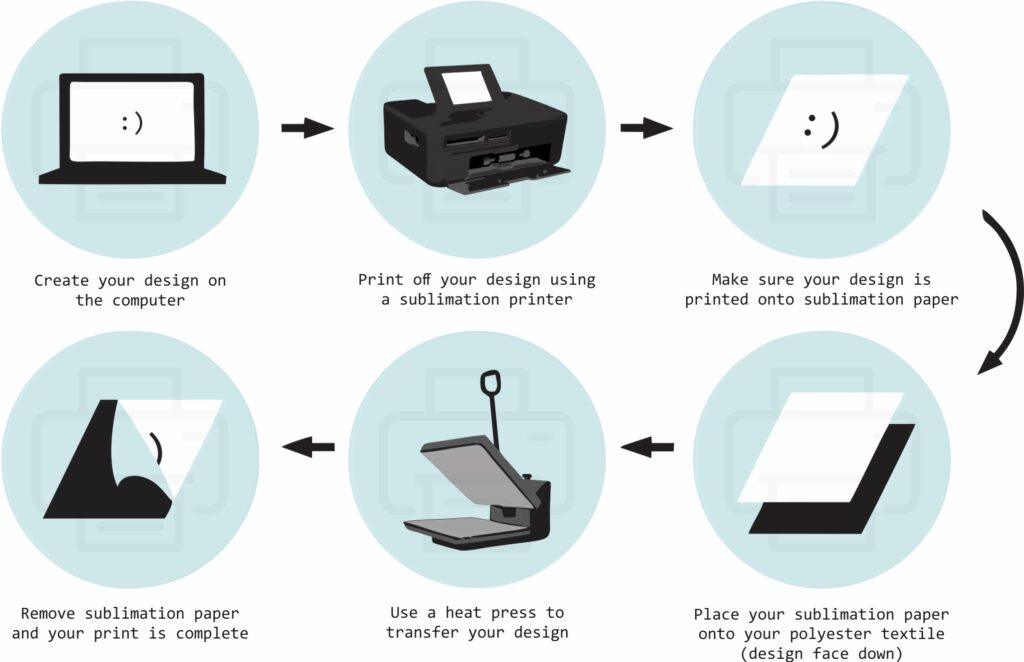
After selecting design patterns, use a sublimation printer to print them out onto the sublimation transfer paper. The design pattern is then transferred from sublimation paper to the fabric using a heat press by applying pressure. Finally, gently remove the transfer paper from the fabric (or whatever object you are using).
Sublimation printing can combine the ink and fabric perfectly, compared with other printing processes, it will not affect the beauty of the fabric due to the wear and tear of the printed pattern.
What Materials Can You Sublimation?
Rigid Substrates – Polymer-treated objects that include non-fabric items like glass, plastic, fiberglass, and aluminum.
Blank Rigid Products – Like mouse pads, phone cases, and mugs that do not have any design or printing can be purchased in bulk at wholesale prices and are perfect for personalized products.
Home Furnishing – Like pillows, blankets and curtains are a popular choice.
Signage – Flags, backlit signs, backdrops, rigid signs, table covers, tents—all these are popular sublimation applications within the sign industry.
Photograph Printing – Arguably the best way to produce the highest-quality photographic images on canvas and apparel.
Fabrics – One of the most popular items for sublimation printing. They are divided into three types:
Sportswear: Sublimation printing is used considerably for the production of t-shirts for all sports. The fabrics used are one-way and two-way stretch in a variety of weights and weaves.
Knit: Polyester products that hang & flow in their natural environment, like apparel, flags, banners, and custom-printed table covers.
Woven: More durable products such as custom tote bags, fabric backdrops, and custom tents.
What Do You Need?
In order to make this form of printing possible, there are five essential tools needed.
1. Sublimation printer
First of all, the most important item would be a sublimation printer. Popular sublimation printer brands include Mimaki, Epson, MS, and Roland.
With the sublimation printer, any spectrum color can be created and transferred onto printing paper suitable for the machine. This type of paper is referred to as sublimation paper or transfer paper. One can print a personal work of art, a customized logo, a family picture, or any design desired for use onto the paper as they do with office paper.
3. Computer & RIP Software
For sublimation printing, RIP software is an integral part, you will require specialized RIP software to handle your CMYK colors. This is because software affects the color performance, the printing characteristics of the ink, and the final print performance. It must be stressed that the software must be compatible with the type of printer used.
4. Sublimation Cutting Machine
Sublimation Printing In Roll First, Then Sublimation Laser Cutting. The use of cutting equipment can effectively improve production efficiency.
5. Heat Press
Another necessity is the heat press, which is a necessary step in the sublimation printing process and is a machine that uses heat to apply designs to various substrates.
The function of the heat press is to transfer the design from the sublimation paper to the requested material, such as mugs, sportswear, and pillows.
Like sublimation printers, heat press are available in a variety of sizes, models, and prices to meet different needs.
Sublimation ink differs from regular ink, regular ink isn’t made to be compatible with sublimation paper. Sublimation transfer ink ( dye sublimation ink), is made up of sublimation disperse dye and a carrier. The carrier includes water (or solvent, or oil), and some chemical addition ingredients.
The dispersed sublimation dye has hydrophobic and polar groups, so it has an excellent affinity for synthetic fibers, and plastics, the color is very vivid.
What’s more, it can spread to the internal fiber and plastic, so when they are transferred to the substrates, the color fastness is very good. Also, the chromatography is complete, vivid color, color fastness, and washing fastness reach more than 4-5.
What Are the Advantages of Sublimation Printing?
Simple and fast to produce, sublimation printing allows on-demand printing, reducing risk and waste.
The sublimation printing process uses 10x less energy consumption than regular dyed fabric and allows for greater customization with infinite possibilities for design.
The garments are printed with sublimation printing, the printed pattern will not crack or wear out after long-term use, the life of the pattern is as long as the life of the garment, and there is also the advantage of a good print feel and vivid colors.
This feature is important for items that are in constant use over time. Everyday items like mouse pads, mugs, and promotional banners are perfect for heat sublimation printing.
This is especially true of clothing and household items, as they can be washed regularly without fear of distortion in appearance.
Sublimation printing can do much more than just the apparel industry. There are many things that can be done in the personalization industry, such as custom phone cases, personalized keychains, creative puzzles, etc.
What Are the Disadvantages of Sublimation Printing?
Material limitation- Sublimation printing is a very effective printing process that creates the perfect effect, but there are limitations to what material it can be used with. The best fabric for sublimation is 100% polyester. Other blended materials will do but aim for a minimum of 50% polyester. Apart from polyester, other good options include nylon spandex and lycra. If you want to print on items that aren’t made from fabric, they must be poly-coated for the process to be most efficient.
Limited to light-colored – Sublimation printing does not work with natural fibers like cotton or paper unless the materials have been treated with a polymer coating beforehand. Furthermore, because sublimation printing is more like high-precision dyeing than imprinting, it works best on white or light-colored materials.
Why Choose Sublimation Printing?
The options of what can be printed on are much wider than with other more affordable printing methods, leaving more room for design.
Whether you are planning to use sublimation printing for your own designs or are looking for high-quality printed products, this article should help you find the information you need.
The principle of DTF printing is straightforward – printing on a particular film, then transferring to the chosen fabric or leather using a heat press. This new technology combines the best of digital inkjet printing and transfer printing. That is becoming more and more popular because of its low cost, high flexibility, and wide range of applications.
Benefits
Applicable material multi
DTF printing allows you to work with any fabric, not just cotton.
Cost-Effective
Lower ink consumption costs.
DTF Printing Equipment & Supplies are also significantly more affordable.
Production Speed
DTF printing has no pretreatment process, able to speed up production.
No need for pre-treatment
If you are familiar with the production of a direct-to-garment (DTG), you must know the pretreating of garments before printing. With DTF, you can omit this part of the procedure.
Washability & Durability
Testing has proven to be equal to if not better than traditional direct-to-garment (DTG) printing.
Easy Application
DTF printing makes it easy to apply artistic designs too difficult areas of garments or fabrics.
Producing ready-to-wear samples is fast and suitable for small batch production, making it the perfect choice for small and medium-sized enterprises.
Excellent performance
High Stretchability and Soft Hand Feel.
For small-scale printing, where you are looking for good color results and you don’t want to make a large investment, DTF may be more suitable.
Disadvantage
Poor air permeability in the print pattern area.
The result of the print on fabric has a slight rubberish feel as compared to prints done using the DTG process on a white t-shirt.
The different hand feels compared to DTG prints.
Need to pay attention to the storage environment of dtf hot melt powder. High temperature & humidity can cause quality issues.
DTF printing is not a perfect replacement for DTG, but its many advantages make it an ideal complement to DTG.
A DTF printer uses PET films as these are different from the ones used in screen printing. These films are also known as DTF Transfer Films in the market. DTF PET films are available in 75u and 100u thicknesses, depending on the temperature, also divided into two categories, cold-peel type films, and hot-peel type films, them has excellent-transferring characteristics. You can see more details about DTF PET films at YIQIA Digital.
RIP Software for DTF Printer
For DTF printing, RIP software is an integral part, you will require specialized RIP software to handle your white and CMYK colors. This is because software affects the color performance, the printing characteristics of the ink, and the final print performance.
Hot-melt adhesive powder is designed to adhere inks to fabrics using DTF printing. Creates a thin adhesive layer on the wet ink deposited on the transfer film, this helps bind the colored pigments in your printer to the surface you are printing on.
DTF printing ink is specially designed for Direct to Film printing and heat transfer. This pigment ink formulation can reduce print head clogging and dryness. It can withstand countless washing cycles without fading.
YIQIA Digital offers different colors of DTF inks such as white, yellow, black, magenta, cyan, orange, green, and also fluorescence pink & fluorescence yellow.
This Direct Film printer component speeds up your production by printing, powdering, shaking, and melting the powder for final and ready DTF transfers.
Curing Oven
This small industrial oven is used in the Curing process, to melt the printer’s hot melt powder, which then goes on the transfer film.
Heat Press Machine
A heat press is a type of machine that utilizes heat in order to apply designs onto various substrates, this equipment helps transfer the printed images on your film onto the desired surface or fabric.
YIQIA DIGITAL has a global presence in many countries, including emerging and mature markets. We have a well-established sales system and are committed to helping our customers improve their digital printing business with our expertise and first-class service.
If you want to know more, please click the contact information below, YIQIA DIGITAL is at your service.


 Difference between before and after sublimation paper transfer.